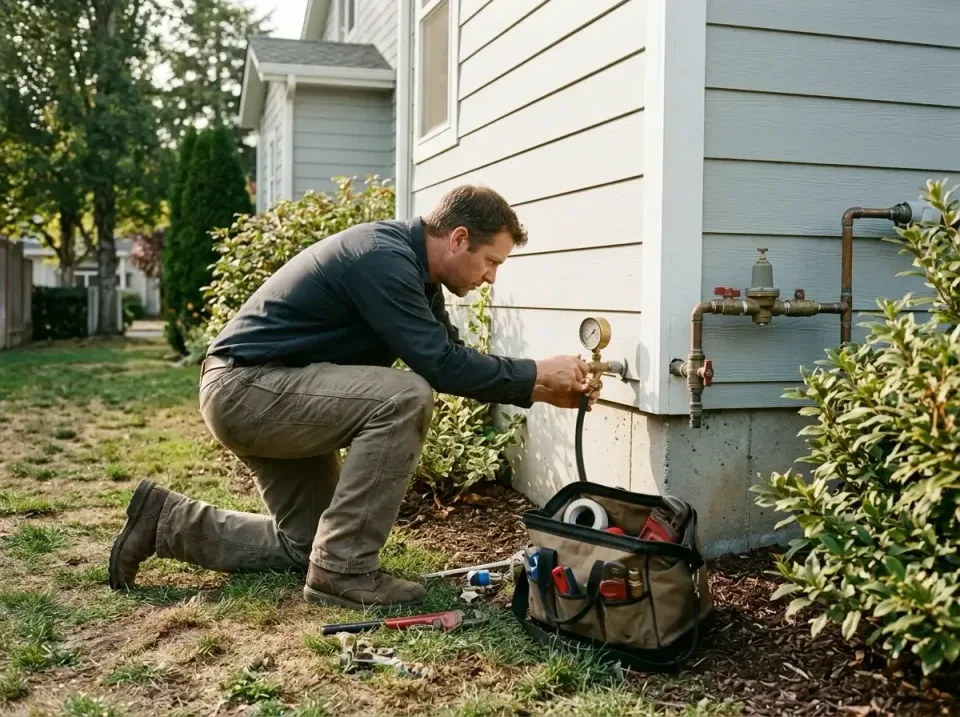
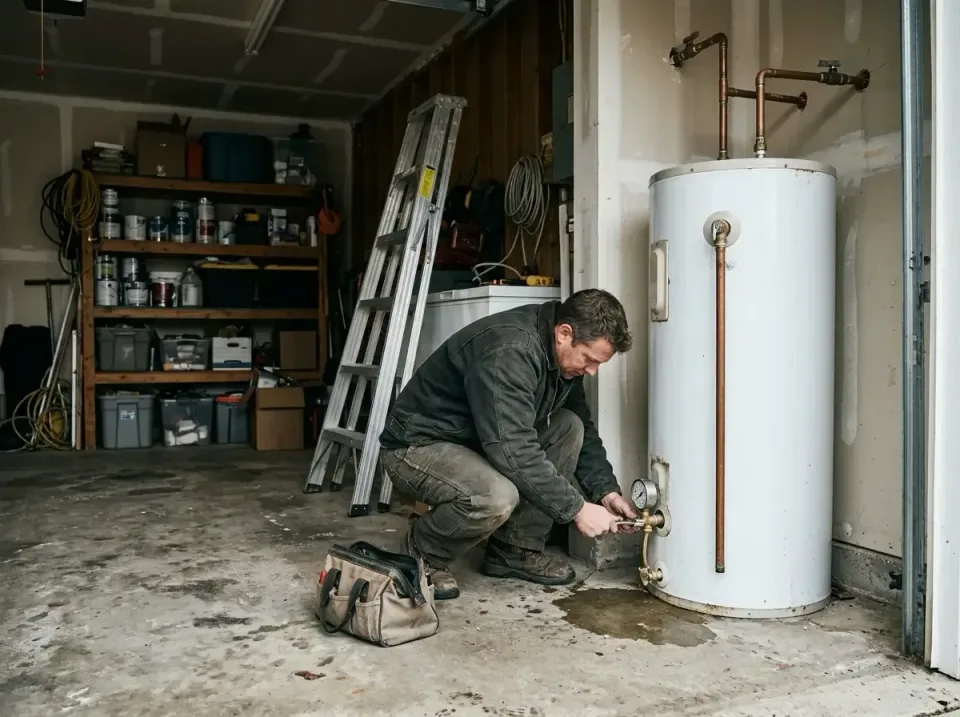
Water Pressure Testing
Local water pressure testing for Providence, RI with a written scope, clear pricing, and scheduling you can plan around.
A pressure switch problem can leave a well pump starting too often and make daily water use unpredictable. Static water pressure is the reading taken while fixtures are off, so it helps distinguish a supply issue from a problem at one tap. Rhode Island Plumbing Pros helps Rhode Island homeowners identify the cause before choosing a repair.
Check the License
Low Water Pressure Repair in Rhode Island is regulated by Providence Water Supply Board; ask any provider for their license number.
What a Visit Covers
A typical visit locate main shutoff before testing.
Typical Price Range
Pressure testing often runs $75–$250 depending on diagnostic scope; get a written quote first.
Weak Shower Stream
Weak shower stream on upper floors — worth a professional look when you notice it.
Local water pressure testing for Providence, RI with a written scope, clear pricing, and scheduling you can plan around.
Water Pressure Adjustment in Providence, RI — what the job involves, what affects the price, and how scheduling works, explained before you book.
Booster Pump Repair in Providence, RI — what the job involves, what affects the price, and how scheduling works, explained before you book.
Local sudden water pressure loss for Providence, RI with a written scope, clear pricing, and scheduling you can plan around.
Local low shower pressure repair for Providence, RI with a written scope, clear pricing, and scheduling you can plan around.
Local low faucet pressure repair for Providence, RI with a written scope, clear pricing, and scheduling you can plan around.
Low Hot Water Pressure in Providence, RI — what the job involves, what affects the price, and how scheduling works, explained before you book.
Whole House Pressure Loss in Providence, RI — what the job involves, what affects the price, and how scheduling works, explained before you book.
Local low well water pressure for Providence, RI with a written scope, clear pricing, and scheduling you can plan around.
Local pressure tank repair for Providence, RI with a written scope, clear pricing, and scheduling you can plan around.
Local water pressure regulator repair for Providence, RI with a written scope, clear pricing, and scheduling you can plan around.
Clogged Water Line Repair in Providence, RI — what the job involves, what affects the price, and how scheduling works, explained before you book.
Grundfos Booster Pump Repair in Providence, RI — what the job involves, what affects the price, and how scheduling works, explained before you book.
Goulds Booster Pump Repair in Providence, RI — what the job involves, what affects the price, and how scheduling works, explained before you book.
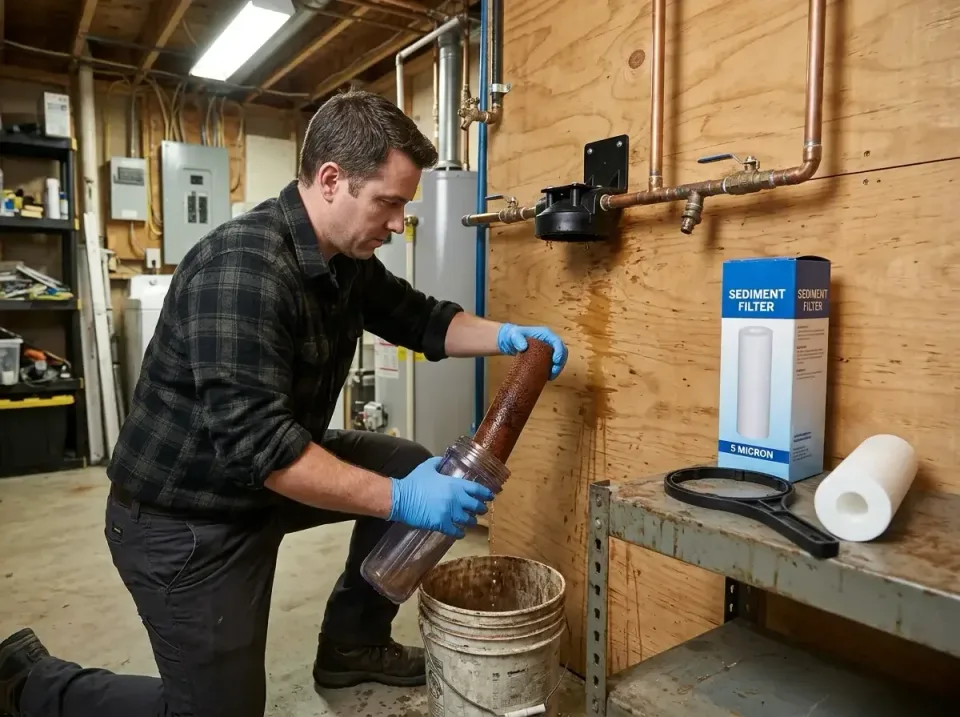
The crew tests first, explains the findings, and focuses repairs on the cause of low pressure.
Test Before Repair
Technicians record static and flowing pressure before adjustments, then check the system after repairs. That helps identify whether a clogged line, regulator, or pressure tank is behind the trouble.
Rhode Island Know-How
Work began in Providence homes, where older pipes and changing water demand can complicate pressure problems. The team schedules visits across Rhode Island and coordinates travel and job-site access with customers.
Clear Findings
Technicians explain what testing shows before work begins. When booster pumps or fixtures are part of the problem, they check those components after repairs and verify pressure at multiple fixtures.
Why us
The crew tests first, explains the findings, and focuses repairs on the cause of low pressure.
Technicians record static and flowing pressure before adjustments, then check the system after repairs. That helps identify whether a clogged line, regulator, or pressure tank is behind the trouble.
Work began in Providence homes, where older pipes and changing water demand can complicate pressure problems. The team schedules visits across Rhode Island and coordinates travel and job-site access with customers.
Technicians explain what testing shows before work begins. When booster pumps or fixtures are part of the problem, they check those components after repairs and verify pressure at multiple fixtures.
Through the year
Spring
Spring rainfall can raise groundwater around basements, while heavy rain can overwhelm drainage and expose leaks. A pressure check can help assess the plumbing system and identify whether a repair is needed.
Summer
Summer heat can raise outdoor water use, and seasonal visitors may add demand in coastal towns. A pressure evaluation can help determine whether the system needs attention as household and outdoor use increase.
Fall
Prepare for winter by checking plumbing near exposed equipment and confirming outdoor shutoffs remain accessible. Freeze-thaw cycles can stress exterior plumbing and buried lines, making fall a useful time to address concerns.
Winter
Cold winters can bring frozen pipes and pressure interruptions, while snow and ice may obstruct outdoor shutoffs. Coastal winds also expose shoreline plumbing; arrange service when access is clear and concerns arise.
Before you hire
Travel and job-site access need coordination statewide. Ask how the team arranges a visit and what access details they need, so you can plan for the technician’s arrival.
A written agreement helps clarify the approved work, any exclusions, and how changes are handled. Ask to review those terms before authorizing repairs so expectations are clear.
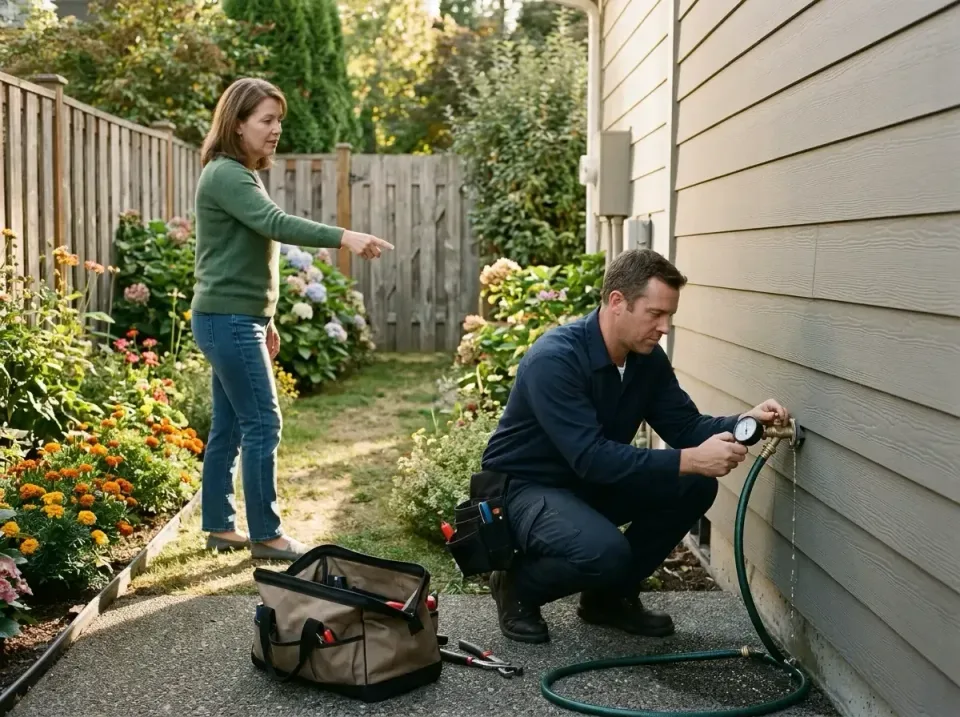
At the Rhode Island State House in Providence and in nearby older homes, pressure complaints can come from different parts of the plumbing. Our crew approaches Low Water Pressure Repair by checking the system before recommending parts. That matters when a low-water-pressure plumber in Rhode Island needs to distinguish a supply issue from a fixture problem; the right diagnosis can prevent a needless replacement.
We use measured findings to explain the repair. A low water pressure repair estimate in Rhode Island should reflect the actual access, equipment, and work involved not a guess made before inspection.
Our Rhode Island plumber can also explain whether a pressure adjustment or a pump-related repair fits the system. We have served Rhode Island for more than 12 years, and we describe findings in plain language.
Cold winters bring frozen pipes and pressure interruptions, so a seasonal interruption may need a different check than a persistent restriction. For a calm scope review, call (877) 773-0781.
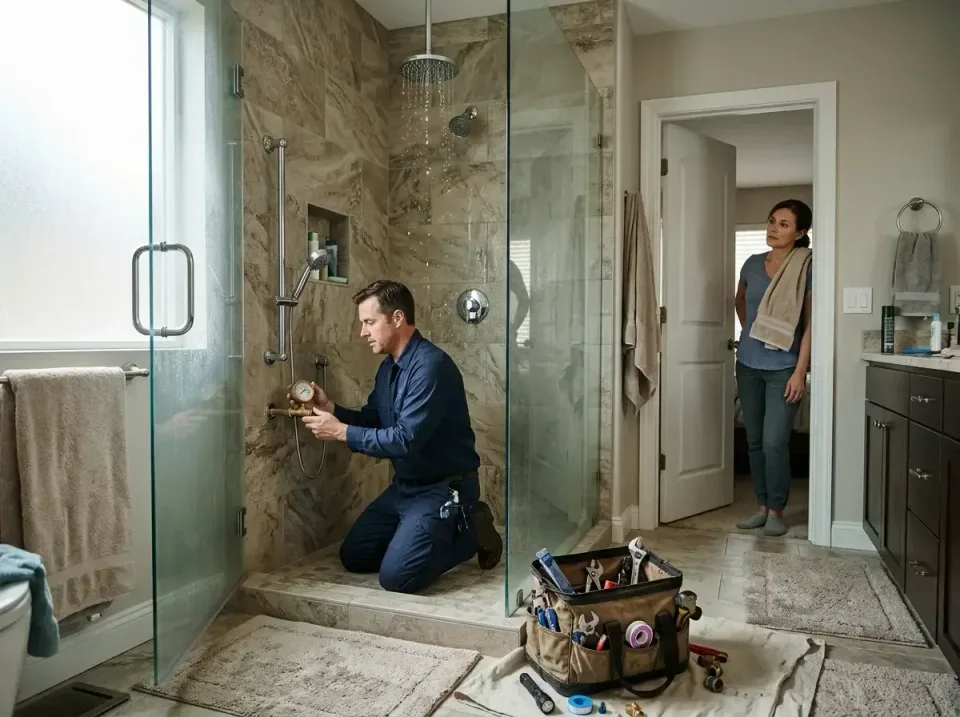
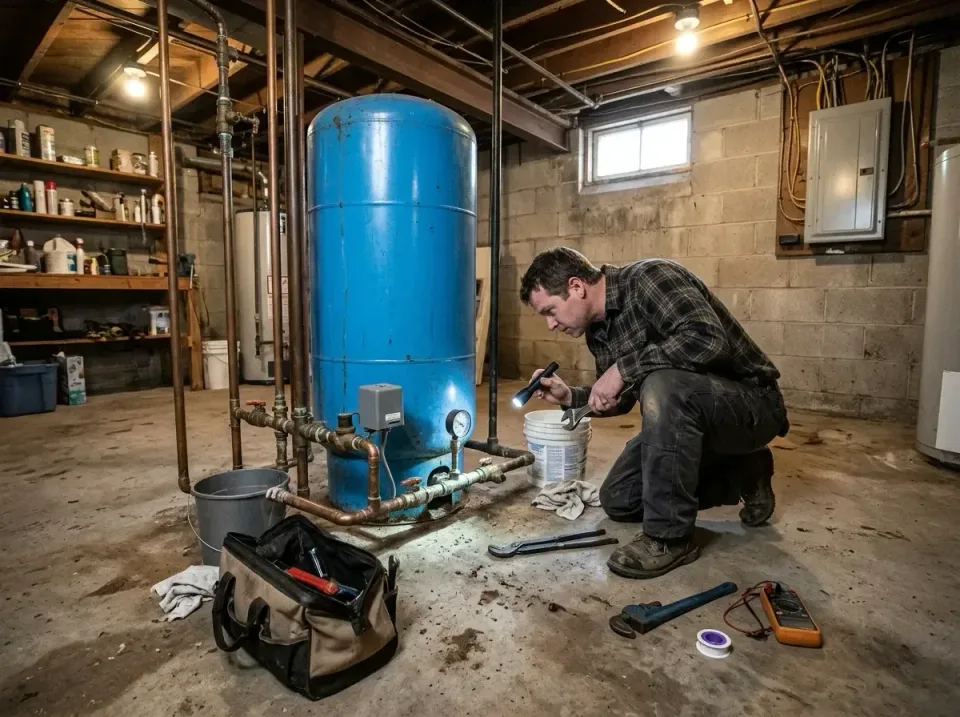
When a pump starts repeatedly or several taps weaken together, the problem may involve the well system rather than a single fixture. A pressure tank stores water under pressure; if its drawdown is inadequate, the pump may cycle more often and wear sooner. We check the tank and controls before recommending a replacement.
A faucet that slows while other fixtures work may instead have an aerator restriction. Cleaning that small screen can restore flow at that fixture, but it will not correct a whole-house loss.
Try removing and rinsing the aerator if you can do so safely. Static pressure is measured with fixtures closed; comparing that reading with flow helps separate pressure from flow-rate problems.
We assess homes near Waterplace Park and elsewhere in Providence with the same test-first approach. The Rhode Island Plumbing Code, 510-RICR-00-00-1, provides the state code framework for plumbing work.
Freeze-thaw cycles can stress exterior plumbing and buried lines. If simple fixture cleaning does not help, our water pressure testing can locate the issue.
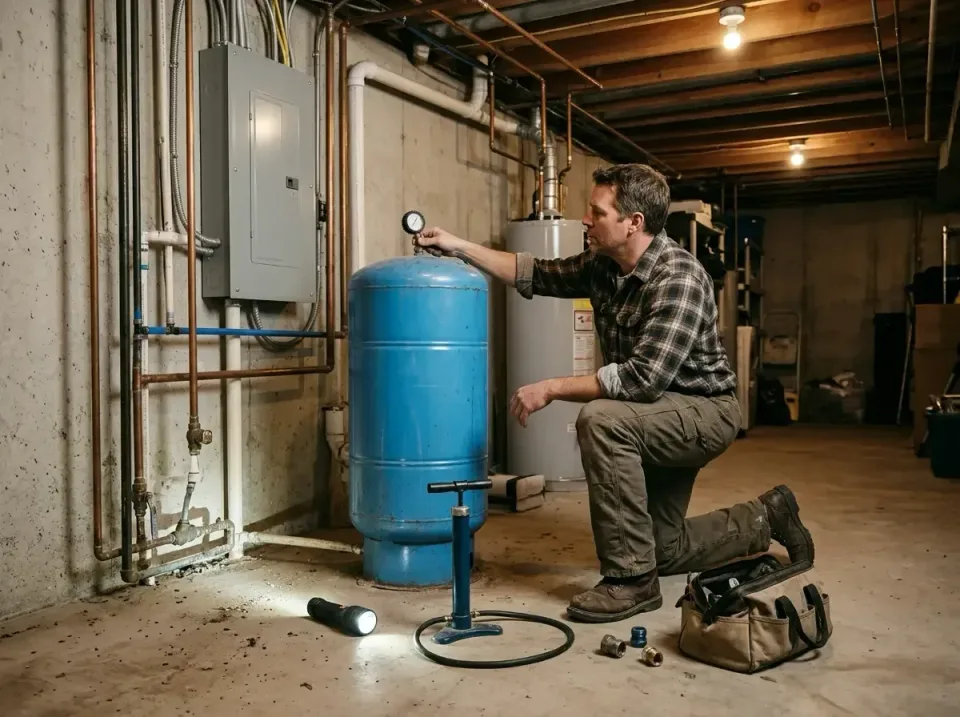
We start by confirming whether the home uses municipal water or a private well, then agree with occupants on when any water shutoff may be needed. That avoids interrupting a shower or appliance cycle unexpectedly.
Next, we locate the main shutoff and record the pressure before anyone opens a fixture. We also ask you to clear access to the pressure regulator so the inspection can be done without moving stored items.
A reading at rest is only part of the picture. We measure flowing pressure at the affected fixture and compare the results to see whether the drop occurs at the supply or along a branch line.
At College Hill in Providence, access to older utility areas can require a little preparation, so a clear path helps us work carefully. Nor’easters may disrupt power-dependent booster pumps, which is relevant when a home relies on one.
We explain the findings and proposed work before proceeding; call (877) 773-0781 to discuss what to have ready.
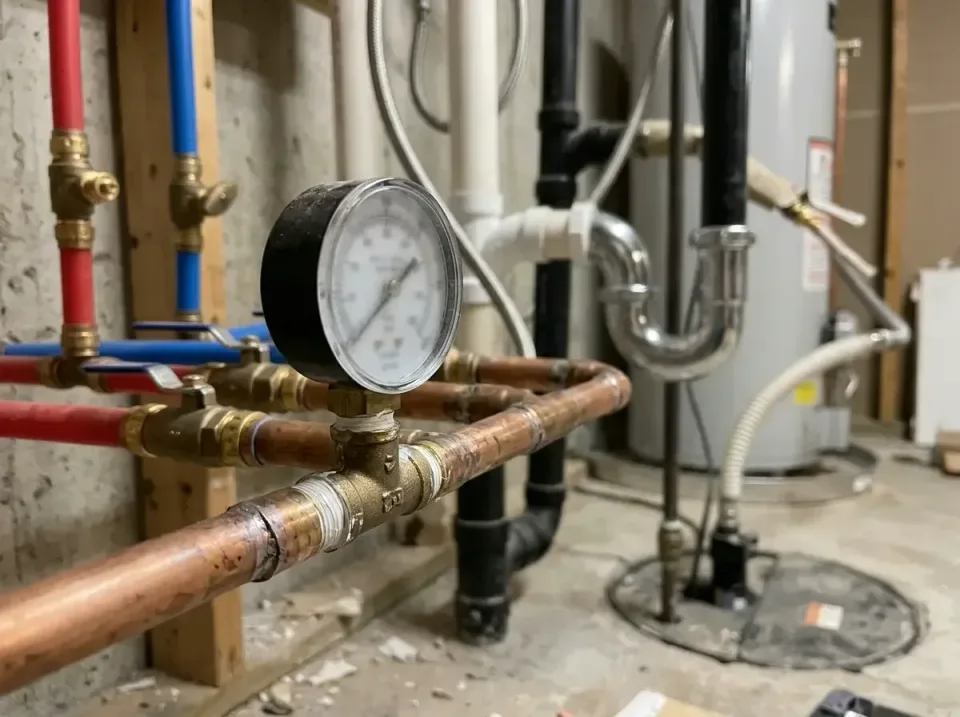
Low pressure repair is for homeowners who want a cause identified before plumbing parts are changed. A sudden loss across the house calls for a different inspection than one weak faucet.
We take on pressure testing to compare readings at the supply and affected fixtures. For an out-of-range system, pressure adjustment may involve inspecting the regulator and confirming the result after the change.
When a pump is involved, booster pump repair can address a unit that is not delivering pressure as expected. A well with repeated pump starts may need attention to its pressure tank rather than a new pump.
If only a single tap is weak, a branch restriction may be more likely than a whole-house supply problem. We explain which finding supports the recommendation and what access the work requires.
Spring rainfall can raise groundwater around basements, so we take care around damp utility spaces. Our pressure adjustment service is one option when measured results point to a regulator issue; call to discuss the system you have.
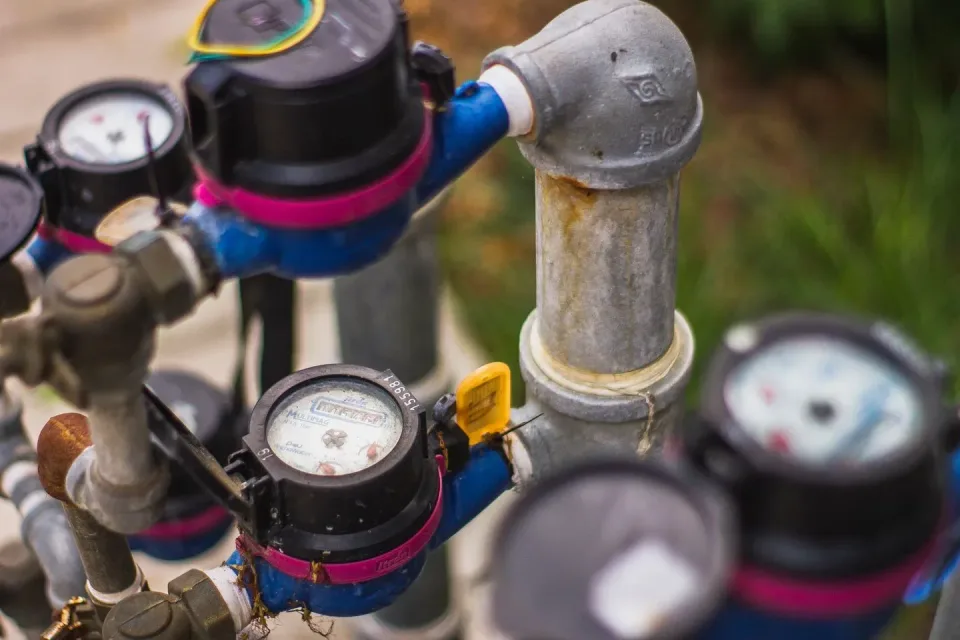
A weak supply may need testing only, while a restricted branch line or pump repair can require more access and parts. Rhode Island Plumbing Pros provides clear, itemized quotes based on the work identified.
Pressure testing is typically $75–$250, depending on diagnostic scope. A pressure regulator replacement is commonly $300–$800; valve access and size affect the work.
A clogged branch-line repair may run $250–$1,200, with the blockage location shaping the scope. Booster pump repair commonly costs $250–$1,000, depending on parts and pump access. These are reference ranges, not a substitute for a site-specific quote.
A pressure gauge with a 0–100 psi range helps measure many residential systems, but the reading alone does not determine the repair. Rhode Island plumbing contractor licensing is governed by R.I.
Gen. Laws § 5-20-1; customers can use that requirement when checking who will perform the work.
Final quotes vary by scope, equipment, access, and site conditions. Contact us at (877) 773-0781 for a final quote.
Straight answers for customers in Providence, RI on pricing, scheduling, and what to expect.
Frequent pump cycling can mean the pressure tank is not providing enough drawdown, or that a control or leak is affecting the system. Note when the pump starts and stops; a plumber can inspect the tank and pressure switch before recommending parts.
A booster pump can help only when testing shows the supply needs assistance and the pump is suitable for the plumbing system. A pressure gauge reading and fixture flow check can help distinguish that situation from a restriction in the line.
Residual pressure is the pressure that remains while water is flowing, so it can reveal a drop that a resting reading may not show. Ask for readings under both conditions and note which fixtures were running.
Flow rate describes how much water reaches a fixture over time, while pressure describes the force in the plumbing. A weak stream can involve either one, so a pressure gauge reading alone may not identify a fixture restriction.
No, frequent cycling by itself does not prove that the pressure tank needs replacement; a leak, control problem, or incorrect tank condition can also contribute. Have the system checked before buying a tank, and protect access around the pump and tank for inspection.
For a kitchen faucet pressure drop or another plumbing concern, call Rhode Island Plumbing Pros at (877) 773-0781 to discuss the next step.
Select a city to find local low water pressure repair providers we cover in Providence.
Low Water Pressure Repair work serving Providence, RI and surrounding areas.